
Easter Day in Poland: Traditions, Food, and What to Do During Easter

.jpeg)
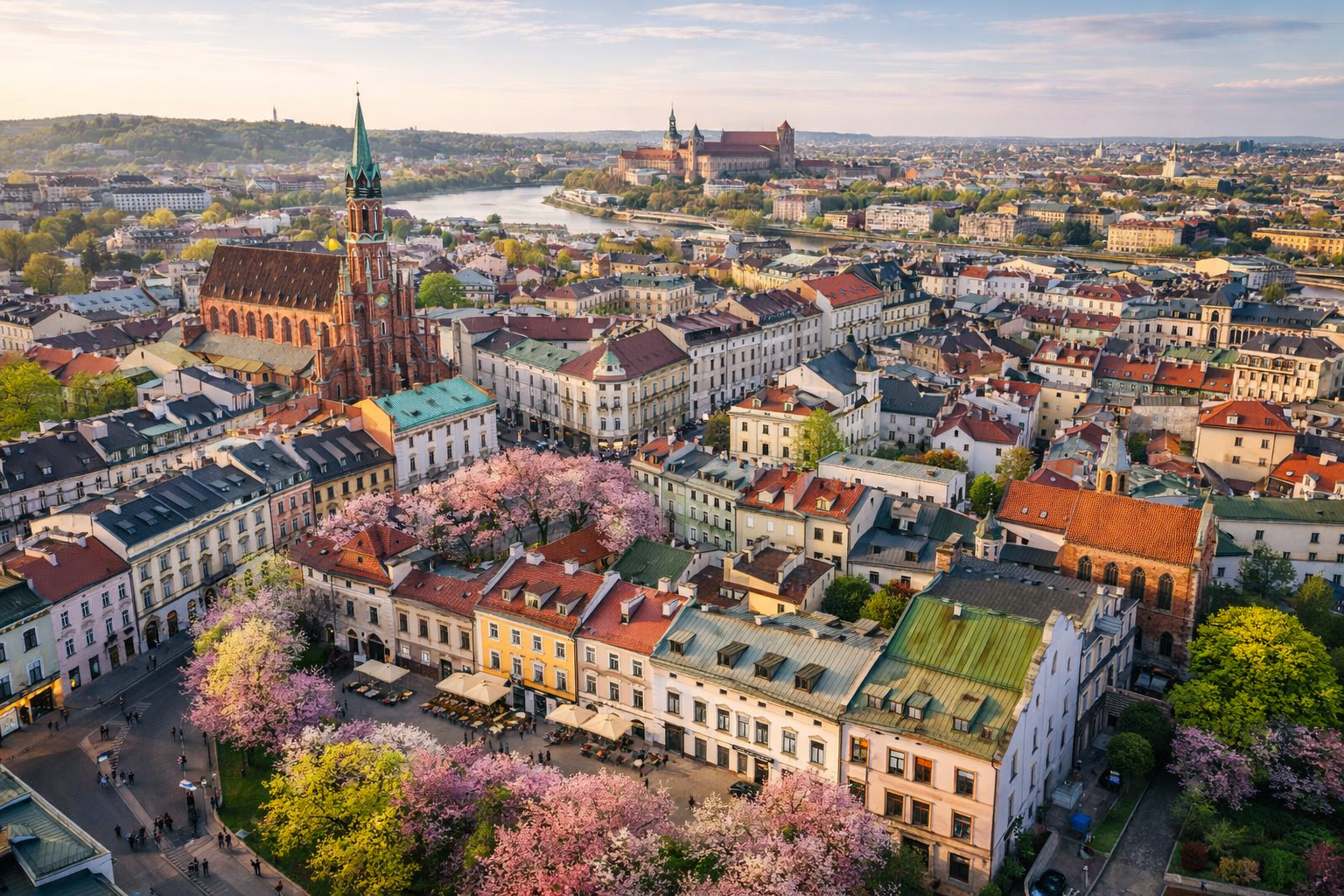
If you are visiting Krakow during Easter, it’s a unique opportunity to experience Polish culture from a very local perspective. From the Easter market on the Main Market Square to walks through the historic Old Town, the atmosphere feels very different from the rest of the year.
In this guide, you’ll discover Easter traditions in Poland, typical holiday food, and what visitors can do in Krakow during Easter to experience this special time like a local.
Key points

When Is Easter in Poland?
Easter in Poland does not have a fixed date and changes every year. The holiday is celebrated on the first Sunday after the first full moon following the spring equinox, which means it usually falls between late March and late April.
For example, Easter in Poland in 2025 is celebrated on April 20, while in 2026 it will fall on April 5.
The main celebrations take place over several days, starting with Palm Sunday and continuing through Holy Week, Easter Sunday, and Easter Monday. During this time many churches, homes, and city squares across Poland are decorated for the holiday.
Holy Week in Poland
Holy Week in Poland is the most important part of the Easter celebrations. It begins with Palm Sunday and continues through several days filled with religious traditions, family preparations, and special customs.
On Palm Sunday, many people attend church carrying decorated palm branches, symbolizing the arrival of spring and the beginning of the Easter season.
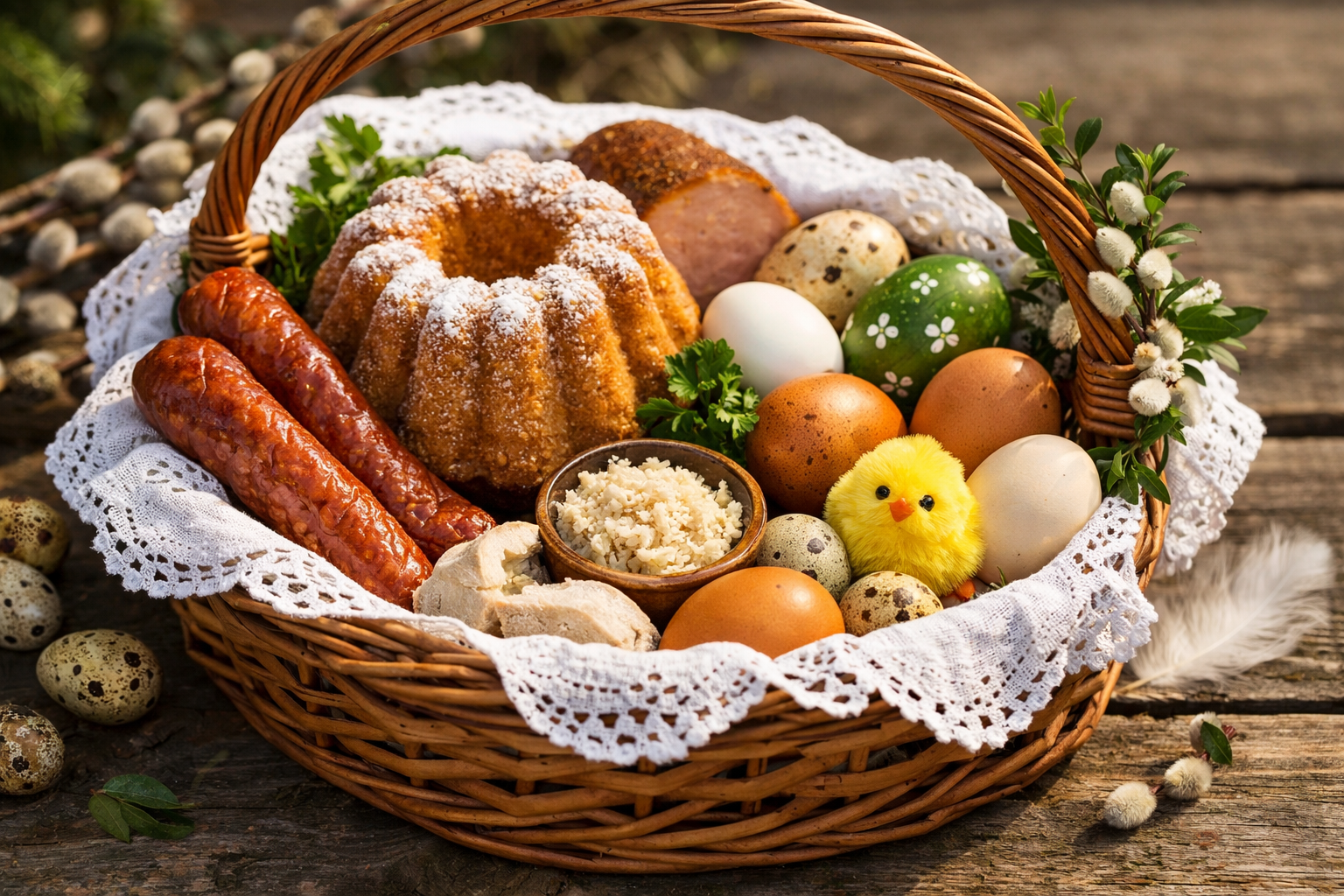
During Holy Saturday, families prepare and bring their Easter baskets (Święconka) to church to be blessed. The baskets usually contain eggs, bread, sausage, and other traditional foods that will later be eaten during the Easter breakfast.
Easter Sunday is the most important day of the holiday, when families gather for a festive breakfast and celebrate together.
The celebrations continue on Easter Monday, also known as Śmigus-Dyngus or Water Monday, when people playfully splash each other with water, a tradition that symbolizes spring, renewal, and good luck.
Polish Easter Traditions
Polish Easter traditions are deeply connected to family, religion, and food. For many people in Poland, Easter is one of the most important moments of the year, when families gather together and celebrate the arrival of spring.
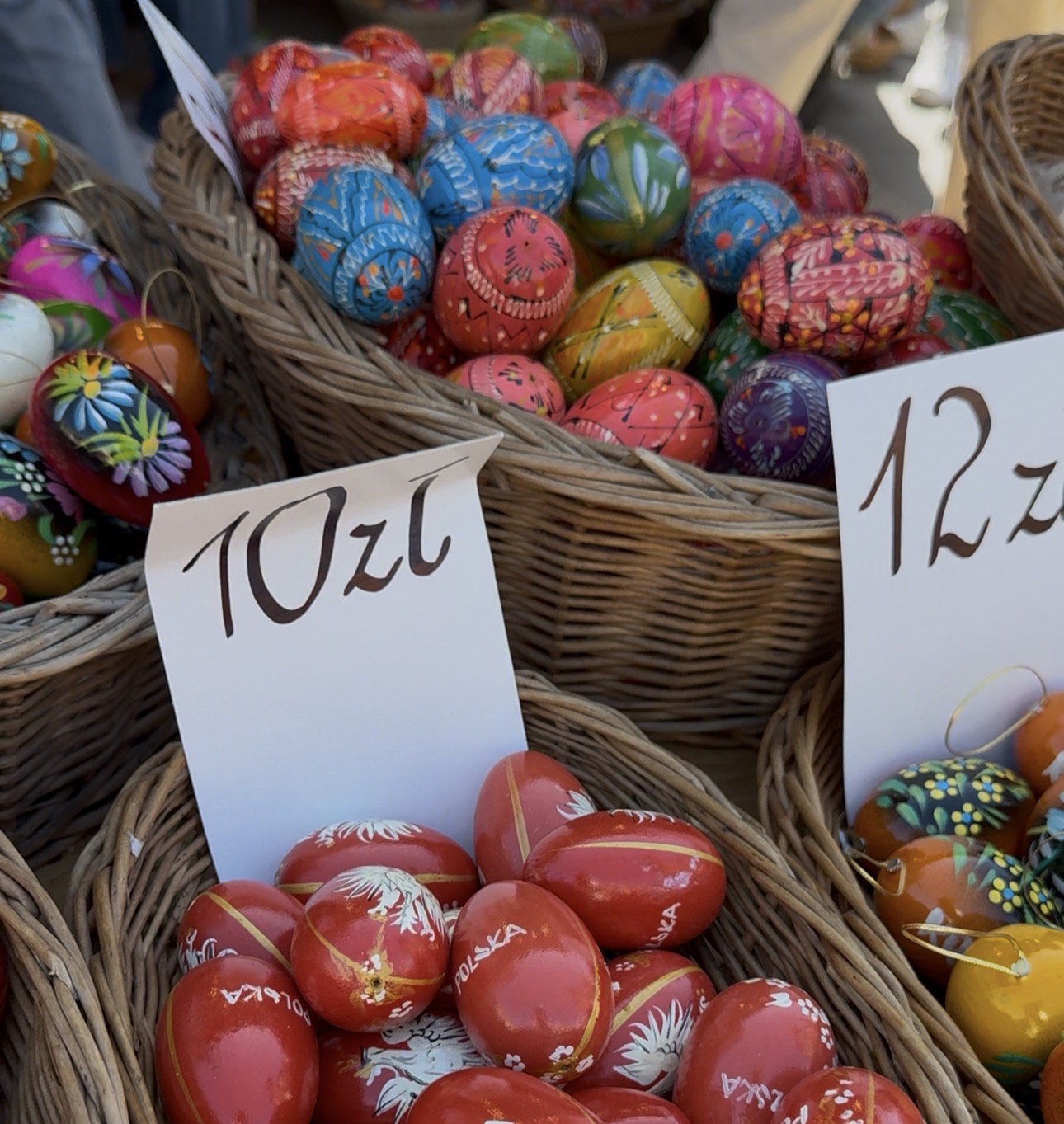
One of the most visible traditions is decorating eggs, known as pisanki. These colorful eggs are often prepared at home and placed in Easter baskets or on the festive table.
Another important custom is the blessing of food on Holy Saturday. Families bring their Easter baskets to church, filled with symbolic products such as eggs, bread, sausage, salt, and horseradish.
Easter Sunday usually begins with a traditional family breakfast, where people share blessed food from the basket.
Traditional Easter Food in Poland
Food plays a very important role in Easter celebrations in Poland. After the long fasting period of Lent, the Easter breakfast is a moment when families gather together and enjoy many traditional dishes.
One of the most popular meals is żurek, a sour rye soup often served with white sausage and eggs. Another classic dish is biała kiełbasa (white sausage), usually served warm with horseradish or mustard.
Eggs are also an essential part of the Easter table, often served with beets and horseradish, which add a strong and traditional flavor.
Sweet desserts are just as important. During Easter many families prepare cakes such as babka and makowiec (poppy seed cake), which are traditional Polish holiday desserts.
Many of these classic dishes can also be found in local restaurants, especially during the Easter season.
What to Do in Krakow During Easter
Visiting Krakow during Easter is a special experience, as the city combines historic traditions with a beautiful spring atmosphere. The Main Market Square and Old Town streets are often decorated with Easter ornaments, flowers, and seasonal markets.
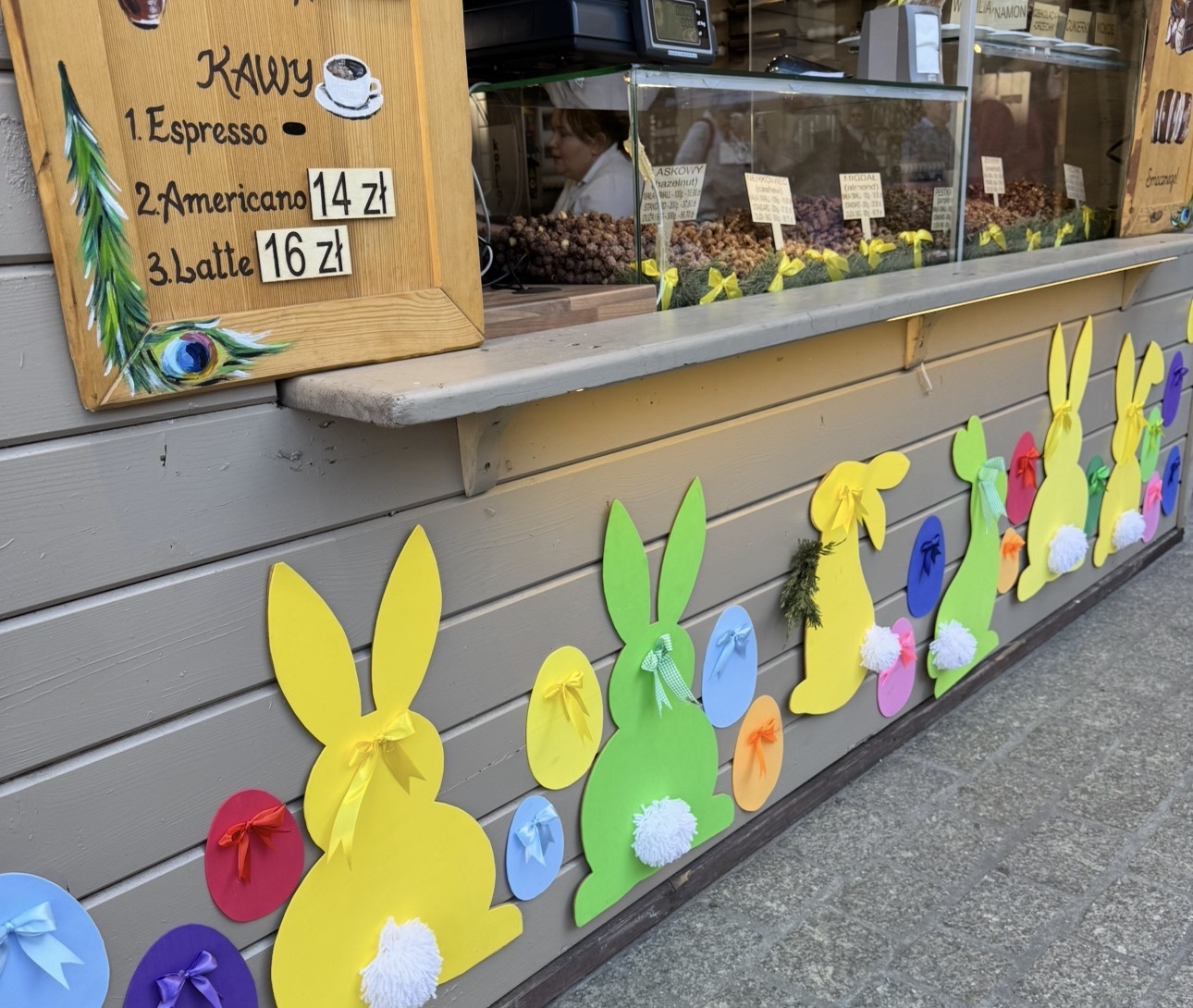
One of the most popular things to see is the Easter market on the Main Market Square, where visitors can find traditional decorations, handmade crafts, and regional food products.
It’s also a great time to explore Krakow on foot. Walking through the Old Town, Kazimierz, or along the Vistula River allows you to enjoy the calmer holiday atmosphere and see the city in a different way.
Many restaurants in the Old Town also offer traditional Easter dishes, making it a perfect opportunity to try seasonal Polish food during your visit.
Visiting Poland During Easter: What Travelers Should Know
If you are visiting Poland during Easter, it’s helpful to know that many businesses operate differently during the holiday.
Most shops, supermarkets, and shopping malls are closed on Easter Sunday, and some may also have limited hours on Easter Monday. Restaurants and cafés in the Old Town and tourist areas usually remain open, but places located further from the city center may be closed.
Public transport generally works normally, although it may run on a holiday schedule.
Some museums in Krakow are closed on Easter Sunday and sometimes on Easter Monday, so it’s always a good idea to check opening hours in advance. The Auschwitz-Birkenau Museum, one of the most visited historical sites near Krakow, is also closed on Easter Sunday.
Because many locals spend the holiday with their families, cities often feel quieter and more relaxed, which can make sightseeing more peaceful for visitors.
Krakow during Easter offers a unique mix of history, tradition, and local culture. From centuries-old customs and beautifully decorated streets to traditional Polish food and family celebrations, the holiday creates a special atmosphere across the city.
For visitors, it’s a great opportunity to experience a more authentic side of Poland. Walking through Krakow’s historic districts, seeing Easter traditions, and enjoying the calmer holiday atmosphere can make your visit even more memorable.
Easter Day in Poland: Traditions, Food, and What to Do During Easter
What to do in Krakow during Easter?
During Easter, visitors can explore Krakow’s Old Town, see Easter markets and decorations, walk through historic districts like Kazimierz, and experience the unique holiday atmosphere in the city.
When is Easter in Poland 2026?
In 2026, Easter in Poland will be celebrated on April 5. Because Easter follows the lunar calendar, the date changes every year and usually falls between late March and late April.
What food is eaten during Easter in Poland?
Traditional Polish Easter food includes dishes such as żurek (sour rye soup), white sausage, eggs served with horseradish or beets, and desserts like babka or makowiec.
What food is eaten during Easter in Poland?
Traditional Polish Easter food includes dishes such as żurek (sour rye soup), white sausage, eggs served with horseradish or beets, and desserts like babka or makowiec.
What is a Polish Easter basket?
A Polish Easter basket, called Święconka, is a basket filled with symbolic foods such as eggs, bread, sausage, and horseradish that families bring to church on Holy Saturday to be blessed.
What is closed during Easter in Poland?
Many shops, supermarkets, and shopping malls are closed on Easter Sunday. Some museums may also be closed during the holiday, while restaurants in tourist areas often remain open.

Latest articles

.jpeg)
Ready to experience Poland like a local?
If you want to try authentic Polish food in places locals actually love and hear the kind of everyday stories you won’t find in any guidebook, I’d be happy to show you around Warsaw or Krakow.
